#What “Answer Engine” Actually Means (In Practice)
Search engines have always aimed to be useful. AI has simply sped that up, which is why AI search optimisation has emerged as a practical response for many businesses.
Today, users are often met with:
- AI-generated summaries
- Featured snippets
- Expanded “People Also Ask” sections
- Platform-native answers on TikTok, YouTube, and social feeds
The result isn’t that search is disappearing.
It’s that fewer clicks are needed to feel informed.
This is why many businesses are seeing:
- flatter traffic
- shorter sessions
- fewer exploratory page views
That doesn’t automatically signal a problem. It signals higher expectations.
#Why Older Content Models Are Struggling
A lot of website content was written for a different environment.
It relies on:
- long scene-setting introductions
- marketing language that builds curiosity
- vague promises instead of direct explanations
That approach worked when the goal was to entice the click.
It works far less well when:
- the answer is already partially visible
- users are scanning, not exploring
- platforms reward clarity over persuasion
Nothing is “wrong” with this content. It’s just misaligned with how information is now selected.
#What Answer-First Content Actually Looks Like
Answer-first content isn’t about dumbing things down or removing personality.
It usually does a few very practical things well:
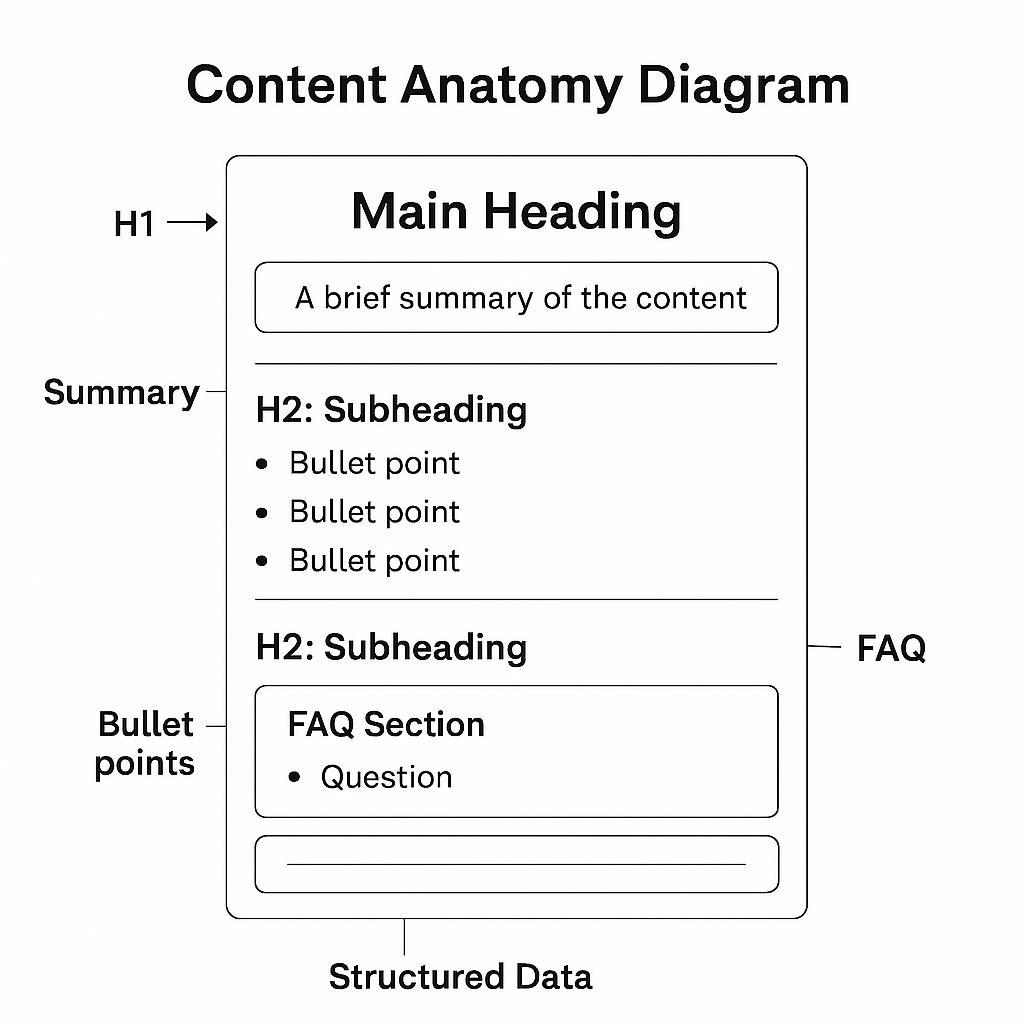
- Answers the main question early
- Uses clear headings and plain language
- Breaks information into scannable sections
- Anticipates follow-up questions instead of hiding them
The goal is to be understood quickly.
Interestingly, this often improves conversion quality, even when overall traffic is lower. People who do click arrive clearer and more confident.
#Why Structure Matters More Than Ever
Structure isn’t just about readability.
It’s how machines understand meaning.
Clear headings, FAQs, and consistent terminology help platforms determine:
- what a page is about
- who it’s for
- when it should be shown as an answer
Unstructured content can still rank.
It’s just far less likely to be selected.
This is why some well-written pages feel invisible while simpler ones surface repeatedly.
#What to Change First (Without Rebuilding Everything)
If your site was written for an older version of search, start small.
Focus on:
- rewriting key service pages to answer buying questions directly
- adding FAQs based on real customer conversations
- removing filler language and internal jargon
- aligning terminology across your site so concepts are consistent
These changes help humans and machines at the same time.
No platform tricks required.
#The Compounding Effect Most Businesses Miss
Businesses that adapt to answer-first content early tend to:
- become easier for AI systems to interpret
- build clearer trust signals for buyers
- see more stable performance over time
The short-term numbers can look messy.
The long-term clarity compounds.
This is one of those shifts where the benefit shows up gradually, not dramatically.
#Bottom Line
Search hasn’t disappeared.
It’s evolved into an environment where:
- clarity beats cleverness
- usefulness beats volume
- structure beats surface-level optimisation
If your content feels like it’s underperforming, it’s worth checking whether it’s actually answering the questions your audience is asking, or just circling them.